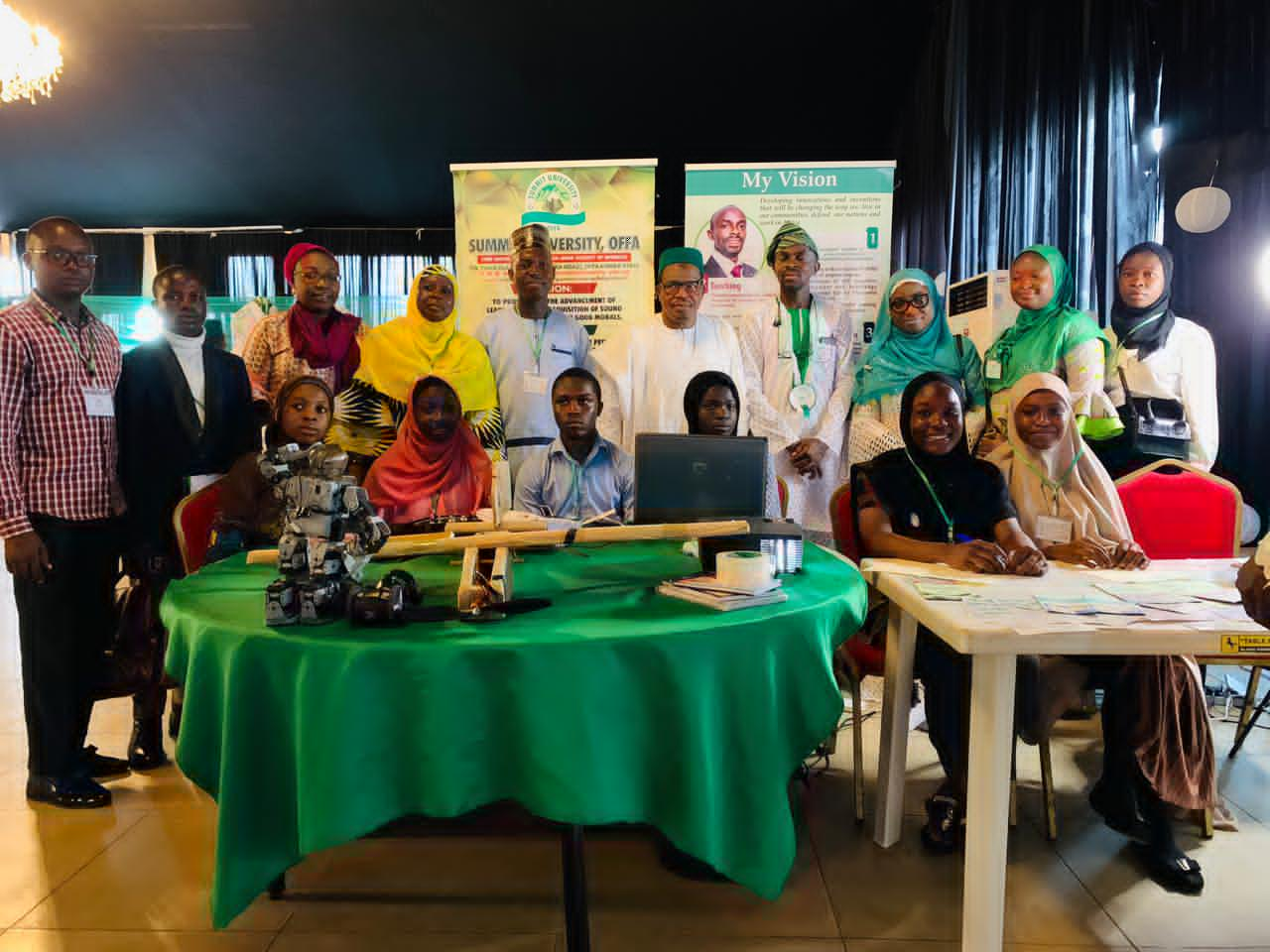
A Nigerian vice-chancellor reflects on the challenges of running a modern university, sharing five lessons on research, student development, funding and innovation amid limited resources.
When I became Vice-Chancellor of Summit University, Offa, I inherited more than the responsibility of running a university. I inherited a question that has stayed with me: how do you build a 21st-century university in a country where ambition often exceeds available resources, and where higher education must respond to changing national needs?
Many university rankings rely on criteria that may not adequately reflect Nigeria’s realities, development priorities or the local challenges universities are expected to address. Success must therefore be measured not only by ranking positions, but also by how well universities prepare students, solve local problems and create lasting value for society.
I knew that university administration would involve managing academic programmes, staff, students, infrastructure and finances. What I did not fully appreciate was the emotional energy required to lead change within a four-year tenure. With limited resources, the challenge is twofold: first, finding the resources needed to pursue change while keeping the vision alive; then implementing it within the time available. These are some of the lessons I have learnt.
Lesson 1: Research Must Go Beyond Publications
One of my strongest convictions is that research groups must be more than names on paper or platforms for producing publications. They must go beyond annual gatherings of lecturers seeking TETFUND NRF grants. They should bring people together to generate knowledge, develop practical solutions, create meaningful impact and make that impact visible to society.
My experience with the Advanced Engineering Innovation Research Group (AEIRG) at the Federal University of Technology, Minna, and later the Innovation Advanced Science Research Group (IASRG) at Summit University strengthened my belief in multidisciplinary research. Societal problems require collaboration among academics, industry practitioners and other stakeholders from different disciplines.
At Summit University, we established a shared working space within the Research and Innovation Unit, comprising a boardroom, an office for visiting scholars and research assistant facilities capable of accommodating over 53 users at a time. The facilities were developed using resources generated through research grants rather than the University’s regular funds.
The shared space supports collaboration, speeds up information exchange and reduces the need for separate meeting arrangements. It also demonstrates value for money by turning grant resources into facilities that continue to support research beyond individual project activities.
These experiences have strengthened my conviction that research should not end with a paper; it should inform policy, develop technologies, solve problems and, where possible, create opportunities for enterprise.
Lesson 2: Connecting the University to Society Through Capstone Projects
I have always believed that a university must not become an island, disconnected from the society it serves. It must understand community challenges and bring its knowledge, people and resources to bear on addressing them.
At Summit University, I have come to see capstone projects as a practical way of translating this conviction into action. They enable students to apply their learning, collaborate across disciplines and engage with stakeholders beyond the University.
Among the many examples I could share is our engagement with the Nigeria Security and Civil Defence Corps (NSCDC), through which we have explored how emerging technologies, including Artificial Intelligence, can strengthen personnel’s analytical and reporting capabilities in their daily operations.
Our poultry egg-theft detection initiative illustrates how a practical community challenge can inspire research, student learning and collaboration. Egg theft poses a significant challenge to poultry farmers, affecting livelihoods and business sustainability. At Summit University, students and researchers are exploring how emerging technologies, including edge Artificial Intelligence and autonomous drones, can support intelligent farm monitoring, detect suspicious activity and generate timely alerts.
The initiative brings together expertise from Summit University, the Federal University of Technology, Minna, and international partners, including the International Centre for Theoretical Physics (ICTP) in Italy and Beyond Vision in Portugal. We are also developing partnerships with Tiwakiki in the United Kingdom, MOMAS in Nigeria and poultry associations.
The work has attracted growing interest from poultry-farming communities and created opportunities for collaboration with industry. Gradually, the community is beginning to recognise Summit University as a source of solutions for egg and poultry farming businesses, building on our earlier recognition in Artificial Intelligence and emerging technologies.
The initiative remains a work in progress. Some software developed through the research is being considered for commercialisation, while we are exploring the possibility of establishing start-ups from EU-funded research. These possibilities will require further testing, investment and validation. A prototype is not a finished product, and commercialisation requires sustained effort.
For me, this initiative demonstrates how a student capstone project can evolve into a wider research effort that connects the university with society and creates opportunities for innovation and practical solutions.
Lesson 3: Students Must Be at the Centre
Students are the reason the university exists, and their experience must remain central to our decisions.
We must ask whether students are acquiring the relevant skills and support needed to thrive in a changing world. At Summit University, we introduced seven 21st-century courses designed to prepare learners for tomorrow, not only for today. These courses were integrated into the curriculum through the flexibility provided by the Core Curriculum and Minimum Academic Standards (CCMAS).
Feedback and evaluation findings indicate that the courses have broadened students’ exposure to emerging technologies, financial literacy, leadership, citizenship, renewable energy, heritage and acadopreneurship. This student-centred approach responds to the need for graduates who can navigate change and contribute meaningfully to society.
Non-teaching staff are also important. They are often the first people students encounter when seeking assistance, and their interactions can shape how students feel about the University. We continue to strengthen staff capacity so that students receive responsive support and timely assistance. A university’s reputation is built not only through lectures, research and buildings, but also through everyday interactions.
Lesson 4: Grantsmanship Is Essential to Sustainability
Enrolment and tuition alone cannot sustain everything a modern university hopes to achieve. We must develop other sources of funding alongside support from our proprietor and partners.
At Summit University, we have secured grants for initiatives such as Artificial Intelligence for Females in STEM (https://ai4fs.com.ng/), Artificial Intelligence for Women in Aquaculture, and the Democratisation of Environmental Literacy in Post-Primary Educational Institutions (DELiTE). We have also participated in the REMARKABLE project.
These grants have supported research and partnerships beyond the University’s regular resources. They have also contributed to the establishment of two STEM-related colleges/faculties, the introduction of eight undergraduate degree programmes and the acquisition of engineering laboratory equipment for STEM-related research and projects.
I have learnt to view grantsmanship not simply as a way of bringing money into the University, but as a means of building research capability, strengthening partnerships and developing infrastructure. Grant-generated resources have also contributed to facilities within the University’s Research and Innovation Unit, creating capacity that can support future research.
Proposal writing can be exhausting, particularly when success is not immediate. Yet grantsmanship helps build the relationships, skills and confidence needed for a university to pursue its ambitions.
Lesson 5: Digital Learning Is No Longer Optional
We implemented a Moodle-based Learning Management System and other platforms to support teaching, learning and examinations.
Importantly, we developed the Moodle platform in-house using open-source software. This has given us greater flexibility and control while building internal capacity, without relying on external consultants. The experience taught me that acquiring technology is not the same as embedding it in institutional practice. Platforms need prepared lecturers, relevant materials, reliable systems and students who can use them effectively.
Our continuing task is to use these platforms consistently to improve course delivery, student engagement and learning outcomes, making digital learning part of the University’s culture rather than simply a system that is available.
The Leadership Skills Required to Run a 21st-Century University
The five lessons shared in this article reflect some of the essential leadership skills required to run a 21st-century university in Nigeria. They highlight the need to foster impactful research, connect the university with society, place students at the centre of institutional decisions, mobilise resources through grantsmanship and embrace digital learning. Together, these skills provide a practical foundation for leading a university in a rapidly changing and resource-constrained environment.
As I reflect on this journey, I am reminded that leadership is not measured only by what we accomplish while in office, but by what others can sustain and advance after we leave. We may not fulfil every dream within our tenure, but we must leave behind stronger foundations, inspired people and a vision that others can continue to pursue.
Running a 21st-century university in Nigeria requires courage to dream, resilience in the face of constraints, patience when progress is slow and the determination to keep moving even when resources are limited. It also demands the humility to recognise that institutional transformation is a journey no single leader can complete alone.
Ultimately, a university’s greatest legacy is not simply its buildings, programmes or rankings, but the lives it transforms, the problems it helps solve and the possibilities it creates for generations to come.
These, for me, are some of the most important lessons and leadership skills needed to run a 21st-century university in Nigeria. We are not merely called to lead institutions for a season; we are called to build institutions that will outlive our season and continue to shine long after we have left.
The stories are many. The lessons are even more.
======
Prof. Abiodun Musa Aibinu, Ph.D.
Professor of Mechatronics Engineering | University Leader | Innovation & AI Advocate
Author, “Notes from a Vice-Chancellor”
Sharing practical insights and lessons from academia, leadership, technology, innovation, and institutional transformation.